When your dog or cat is scheduled for spaying, it is easy to assume that all procedures are the same. Many pet owners don’t realize that the level of monitoring, the quality of anesthesia protocols, the surgical technique used, and the post-operative care provided can vary widely from one practice to another, and those differences can directly affect how safely and comfortably your pet comes through the experience.
At Montclair Veterinary Associates, we believe your pet deserves more than a routine approach to one of the most significant surgeries of her life. Led by Dr. Cory Waxman, a University of Pennsylvania School of Veterinary Medicine graduate who has been caring for pets in Northern NJ since 2011, our team approaches every spay procedure with the same commitment to safety and individualized care that defines everything we do.
What Sets a Comprehensive Spay Apart?
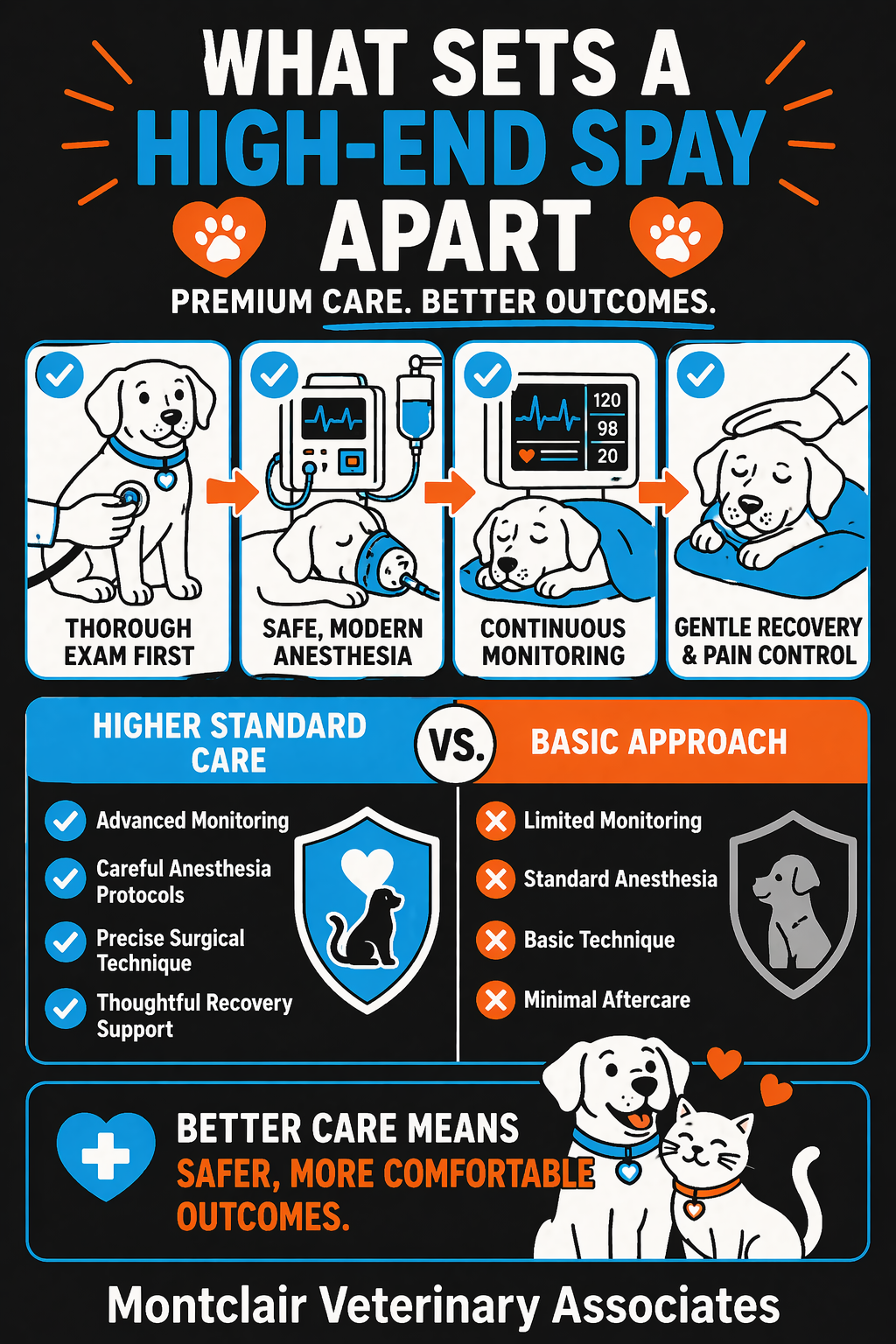
Not all spays are created equal. A comprehensive spay goes beyond simply performing the surgery. It encompasses every phase of the experience, from the initial pre-surgical evaluation through anesthesia administration, intraoperative monitoring, and recovery. Established veterinary medical care guidelines for spay-neuter programs specifically address preoperative evaluation, anesthetic protocol, surgical technique, and postoperative care as the components that separate a higher-standard approach from a basic one, which helps you ask the right questions and make a confident decision for your pet.
Pre-Surgical Evaluation
Before any anesthesia is administered, a thorough routine health examination is essential. This evaluation assesses your pet’s current health status, identifies any underlying conditions that could complicate surgery, and enables the veterinarian to tailor the anesthetic protocol to your pet’s specific needs. Skipping this step is one of the most common ways corners get cut in lower-cost procedures.
Anesthesia Monitoring and Pain Management
A comprehensive spay uses individualized anesthesia protocols rather than a one-size-fits-all approach. Throughout the procedure, a dedicated team member monitors vital signs, including heart rate, blood pressure, oxygen saturation, and respiratory rate. Multimodal pain management, meaning the use of multiple pain control methods before, during, and after surgery, significantly reduces discomfort during recovery. The anesthesia and monitoring standards for a well-executed spay are far more rigorous than many pet owners expect.
Why Surgical Technique Matters
The method used to perform the spay itself also plays a meaningful role in your pet’s recovery time and overall outcome.
Precision and Recovery
A skilled veterinarian performing soft tissue surgery with precision and care creates smaller, cleaner incisions, minimizes tissue trauma, and reduces the risk of post-operative complications. The goal is a faster, less painful recovery for your pet, and consistent surgical technique across procedures builds a track record you can trust.
Long-Term Health Benefits
According to the American Veterinary Medical Association, spaying provides significant long-term health benefits, including eliminating the risk of uterine infections and reducing the risk of mammary tumors, which makes the procedure worth prioritizing even for pets who show no current health concerns. Some dog breeds also have unique anatomical or health considerations that require adjusted surgical planning, so we tailor our approach to your pet’s specific needs.
The following are the key components distinguishing a comprehensive spay experience:
- Pre-surgical bloodwork: Identifies organ function issues or clotting abnormalities before anesthesia is used
- Individualized anesthetic protocol: Tailored to your pet’s age, weight, breed, and health history
- Dedicated anesthesia monitoring: A team member focused solely on monitoring vitals throughout the procedure
- Multimodal pain management: Pain control is administered before, during, and after surgery for a more comfortable recovery
- Sterile surgical environment: Proper technique and sterile protocols that reduce infection risk
- Post-operative care instructions: Detailed guidance to support healing and flag complications early
Every one of these elements contributes to a safer experience and a smoother recovery for your pet.
The Best Age and Timing for Spaying
Timing is one of the most common questions we hear from pet owners weighing when to schedule this surgery.
Traditional Timing
Many veterinarians have traditionally recommended spaying between five and six months of age, before a female pet’s first heat cycle, since this timing offers strong protection against mammary tumors and uterine infections later in life. Kittens and puppies can potentially be spayed as young as eight weeks old if they are healthy and meet minimum weight requirements, which is why your pet’s individual health status matters more than a single fixed age.
Size and Breed Considerations
Larger dog breeds sometimes benefit from a later spay date to support proper bone and joint development, while smaller breeds and cats are generally cleared earlier. We evaluate your pet’s breed, size, growth pattern, and overall health during a routine exam before recommending a specific timeline, so you can book an appointment online to discuss the timing that fits your pet best.
What to Expect During Recovery
Recovery from a comprehensive spay tends to be shorter and more comfortable than pet owners often anticipate, though the first few days still call for close attention at home.
The First Few Days at Home
Most pets go home the same day and may seem groggy or subdued for the first 24 hours as the anesthesia fully clears their system. A quiet, confined space away from stairs, other pets, and rough play helps prevent strain on the incision. Following our soft tissue surgery recovery guidance during this window supports proper healing and reduces the chance of complications.
Signs to Watch For During Healing
Check the incision daily for redness, swelling, or discharge, and use an Elizabethan collar if your pet tries to lick or chew at the site. Most pets return to normal energy and appetite within a few days, though full internal healing can potentially take up to two weeks. Contact us if you notice open incisions, lethargy, vomiting, or loss of appetite at any point during recovery.
Common Myths About Spaying
A few persistent misconceptions still cause some pet owners to delay or question this procedure.
Behavior and Weight Myths
Spaying does not cause weight gain on its own; reduced activity and overfeeding are the actual causes, and both are manageable with consistent exercise and portion control. Similarly, spaying does not change your pet’s core personality. Some pets show calmer behavior once hormonal cycles stop, but your pet’s temperament and the bond you share remain intact.
Safety and Timing Myths
Some owners believe a female pet should have one litter before being spayed, but there is no medical evidence supporting this idea, and it only exposes your pet to the risks of pregnancy and delivery. Others worry that the surgery itself is unusually dangerous, when in reality a comprehensive spay performed with proper pre-surgical evaluation, monitoring, and pain management carries a well-established safety profile for healthy pets.
Choose Montclair Veterinary Associates for Your Pet’s Spay
At Montclair Veterinary Associates, we do not take shortcuts with your pet’s care. Dr. Waxman’s background in biochemistry from Northwestern University, combined with his veterinary training at the University of Pennsylvania and more than a decade of practice in Northern NJ, means your pet is in capable and experienced hands. He approaches every surgical procedure with the same attention to detail and genuine care for the animals he treats.
If you have questions about what to expect from your pet’s spay procedure or want to learn more about our approach, we encourage you to reach out to our team. We are happy to walk you through every step of the process so you feel confident and informed.
Frequently Asked Questions About Comprehensive Spay Procedures
What makes a spay “comprehensive” versus a basic procedure?
A comprehensive spay includes every phase of care rather than just the surgery itself. That means a full pre-surgical evaluation and bloodwork, an anesthesia protocol tailored to your pet’s age and health history, a dedicated team member monitoring vital signs throughout the procedure, multimodal pain management before and after surgery, and detailed post-operative instructions. A basic or lower-cost procedure may skip one or more of these steps to reduce cost or time.
What is the best age to spay my dog or cat?
Many veterinarians recommend spaying between five and six months of age, before a first heat cycle, though healthy kittens and puppies can potentially be spayed as young as eight weeks old. Larger dog breeds sometimes benefit from a later spay date to support bone and joint development. The right timing depends on your pet’s breed, size, and overall health, so we recommend a routine exam to help determine the best schedule for your pet.
How long does it take for my pet to recover from a spay surgery?
Most pets return to normal energy and appetite within a few days, though full internal healing can potentially take up to two weeks. The first 24 hours call for the closest attention, since your pet may still seem groggy from anesthesia. A quiet space away from stairs and rough play, along with an Elizabethan collar to prevent licking at the incision, supports a smoother recovery during this window.
Is pre-surgical bloodwork really necessary for a healthy young pet?
Yes. Pre-surgical bloodwork identifies organ function issues or clotting abnormalities that are not always visible during a physical exam, even in a pet that appears completely healthy. This information allows your veterinarian to tailor the anesthesia protocol to your pet’s specific needs and catch potential complications before they become a problem during surgery. Skipping this step is one of the most common ways corners get cut in lower-cost procedures.
Does spaying cause my pet to gain weight or change her personality?
Spaying does not directly cause weight gain; reduced activity and overfeeding are the actual causes, and both can be managed with consistent exercise and portion control. Your pet’s core personality and the bond you share also remain intact after surgery. Some pets show calmer behavior once hormonal cycles stop, but this is a behavioral shift tied to hormones, not a change in who your pet fundamentally is.