
Pet Microchipping in Montclair, NJ
One in three pets will become lost at some point during their lives. A missing pet can slip out during a storm, dart through an open door, or wander off during a walk — and without proper identification, the chances of making it home drop significantly. A collar and tag help, but they can fall off or become unreadable. A microchip cannot.
At Montclair Veterinary Associates, we offer pet microchipping in Montclair, NJ as part of our comprehensive veterinary services. The procedure takes just a few minutes, causes minimal discomfort, and provides your pet with permanent, tamper-proof identification that lasts a lifetime. Dr. Cory Waxman has been caring for pets across Northern NJ since 2011, and microchipping is one of the simplest yet most impactful steps we recommend for every pet owner — regardless of whether your pet stays indoors or ventures outside.
Pet Microchipping in Montclair, NJ
A microchip is a tiny electronic device — roughly the size of a grain of rice — that is implanted beneath the skin between your pet’s shoulder blades. It contains a unique identification number linked to your contact information in a national registry. According to the American Veterinary Medical Association, dogs with microchips are returned to their owners at a rate of 52.2%, compared to just 21.9% for dogs without. For cats, the difference is even more striking: microchipped cats are reunited with their owners at a rate of 38.5%, compared to just 1.8% for cats without one.
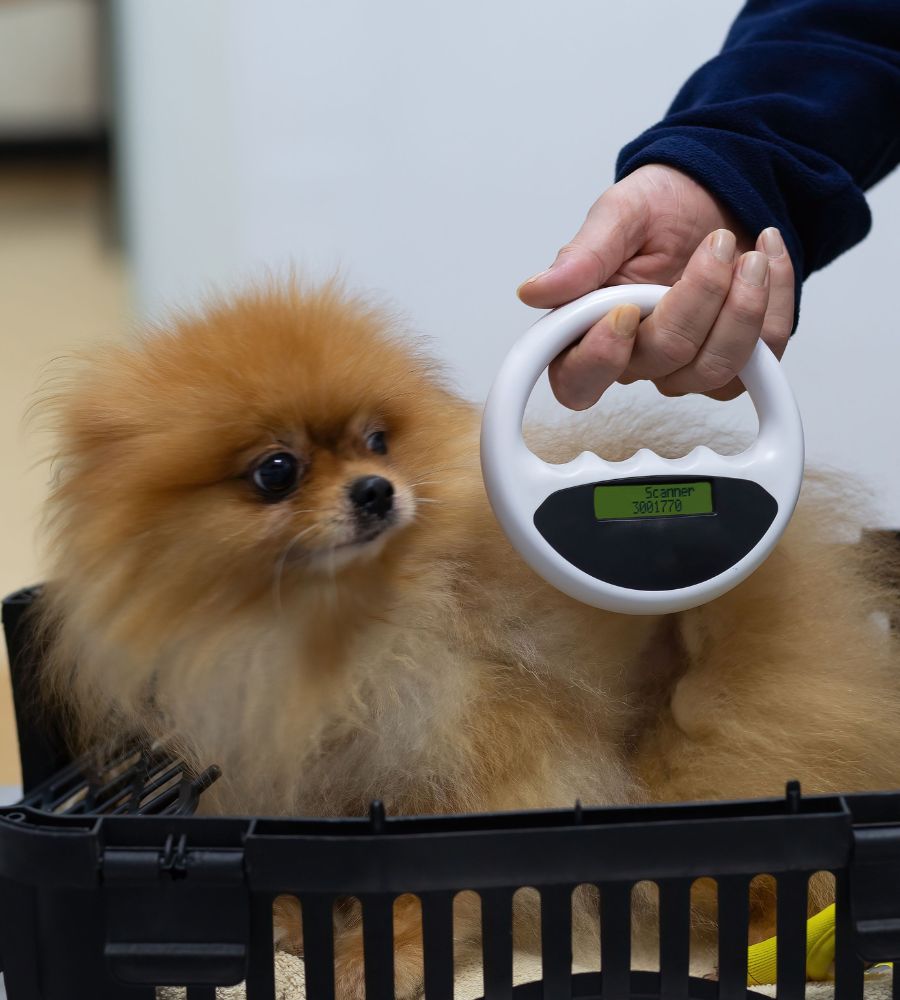
The chip itself requires no battery and no maintenance — it uses passive RFID technology activated by a handheld scanner. When a lost pet is brought to a veterinary clinic, animal shelter, or animal control facility, staff scan for the chip, retrieve the ID number, and use it to locate the registered owner. The chip is permanently embedded in your pet’s tissue and cannot fall off, wear out, or be removed the way a collar can.
The Microchipping Procedure
Microchip implantation is a quick, simple procedure that takes just a few minutes and causes minimal discomfort. Using a sterile needle slightly larger than those used for vaccinations, the chip is placed beneath the loose skin between your pet’s shoulder blades, where it stays securely for life. No anesthesia is required. Most pets experience only brief discomfort — similar to a routine vaccination — and can resume normal activities immediately afterward.
Because the procedure is so fast and straightforward, it can easily be done during a routine wellness visit, or combined with a spay or neuter surgery, or alongside early vaccinations. Puppies and kittens can be safely microchipped as early as six to eight weeks of age, and adult pets can be chipped at any age.
Why microchipping is the right choice:
The entire procedure is faster than a routine vaccine — no prep, no recovery time
Unlike collars or tags, a microchip cannot fall off, fade, or become unreadable
Done during any regular visit — no special appointment or sedation required
Can be implanted as early as 6–8 weeks — easy to combine with vaccines or spay/neuter
ISO-standard chips are readable by scanners at any shelter, vet clinic, or animal control
Microchipped pets are significantly more likely to be returned home if lost
Keeping Your Registration Current
The chip itself stores only a unique identification number — it is the registration database that connects that number to you. This means the microchip only works if the registration is accurate and up to date. When you move, change your phone number, or transfer ownership of a pet, updating the registry is essential. Most microchip registries offer simple online portals to manage your contact information. At Montclair Veterinary Associates, we will walk you through the registration process at the time of implantation and make sure everything is confirmed before you leave.
Why Indoor Pets Need Microchips Too
Many pet owners assume microchipping is only for dogs who spend time outdoors. In reality, indoor cats account for a significant portion of lost pet cases — escaped during a move, slipped out during a home repair, or bolted during a thunderstorm when a door was left open. The same applies to even the most well-trained dogs, who can become disoriented during travel, fireworks, or other unexpected situations. A microchip is the one form of identification that cannot be lost, broken, or left behind.
What We Recommend at Montclair Veterinary Associates
Microchipping is one of several protection layers we recommend for every pet. It works best alongside a well-fitted collar with an ID tag, which allows good Samaritans to contact you directly without needing to visit a shelter or clinic. GPS tracking collars can add another layer of real-time location monitoring, but they do not replace the permanent reliability of a registered microchip.
A complete pet ID strategy includes:
- ✔ Microchip implanted and registered with accurate contact info
- ✔ Collar with current ID tag including your phone number
- ✔ Registration kept up to date whenever you move or change numbers
- ✔ Annual check at your pet’s wellness visit to confirm chip is still readable
Pet Microchipping at Montclair Veterinary Associates
Dr. Waxman and our team have been performing microchip implantations as a routine part of preventive care since 2011. It is one of the fastest, most affordable things you can do to protect your pet — and one of the most effective. A University of Pennsylvania School of Veterinary Medicine graduate with deep roots in the Northern NJ community, Dr. Waxman takes a thorough, unhurried approach to every appointment, including microchipping. To learn more about our team, visit our about page.
If your pet has not yet been microchipped, or if you are unsure whether your existing chip is registered and readable, contact our office today. We can scan for a chip, confirm its registration status, and implant one if needed — all in a single visit.
Microchip Safety & Effectiveness
Montclair Veterinary Associates
Give your pet a permanent way home
Microchipping takes minutes and lasts a lifetime. Book your pet’s appointment today.
The Microchipping Procedure
When to Microchip Your Pet
Maintaining Your Microchip Registration
Additional Benefits of Microchipping
Combining Microchips with Other Identification
Professional Microchipping Services
How do animal shelters use microchips to help reunite lost pets with their families?
Many animal shelters and humane societies use a microchip scanner to read the unique identification number from a lost pet’s chip. This microchip number is then matched with the owner’s contact information through a microchip registry. This process allows responsible pet owners to be contacted quickly, significantly improving the chances of a successful reunion, even when pets aren’t wearing collars or identification tags.
What should responsible pet owners know about keeping microchip information current?
Responsible pet owners must ensure their contact information is updated in the microchip registry. The microchip implanted in your pet only stores an ID number, so updating details whenever you move or change phone numbers is crucial. Most microchip manufacturers offer easy online tools to manage your pet’s data, ensuring that if your pet ends up in animal shelters or clinics, they can reach you quickly using a microchip scanner.
Are there different microchip frequencies, and does that affect how they’re read?
Yes, there are various microchip frequencies, but most modern chips in the U.S. follow ISO standards, ensuring compatibility with universal microchip scanners. This allows humane societies, animal shelters, and veterinary clinics to read microchips regardless of brand. The American Animal Hospital Association supports universal scanners to eliminate frequency mismatches and ensure that any microchip number can be identified and traced efficiently.
When is the best time to have a microchip implanted in your pet?
Pets can have a microchip implanted as early as six to eight weeks of age, often during spay/neuter procedures or early vaccinations. This is a good time for responsible pet owners to act. Adult pets can be chipped at any age. Whether your pet is always indoors or ventures outside, microchipping helps many animal shelters and humane societies reunite lost pets with their owners, regardless of the pet’s age or habits.
Do microchips replace the need for identification tags?
While microchips provide permanent ID, they don’t replace visible identification tags. A microchip scanner requires the pet to be brought to a shelter or vet, while tags allow immediate contact. Responsible pet owners should use both methods for the best protection. Many humane societies and animal shelters recommend combining microchipping with tags to increase the likelihood of a fast reunion, especially if the microchip number can’t be scanned right away.