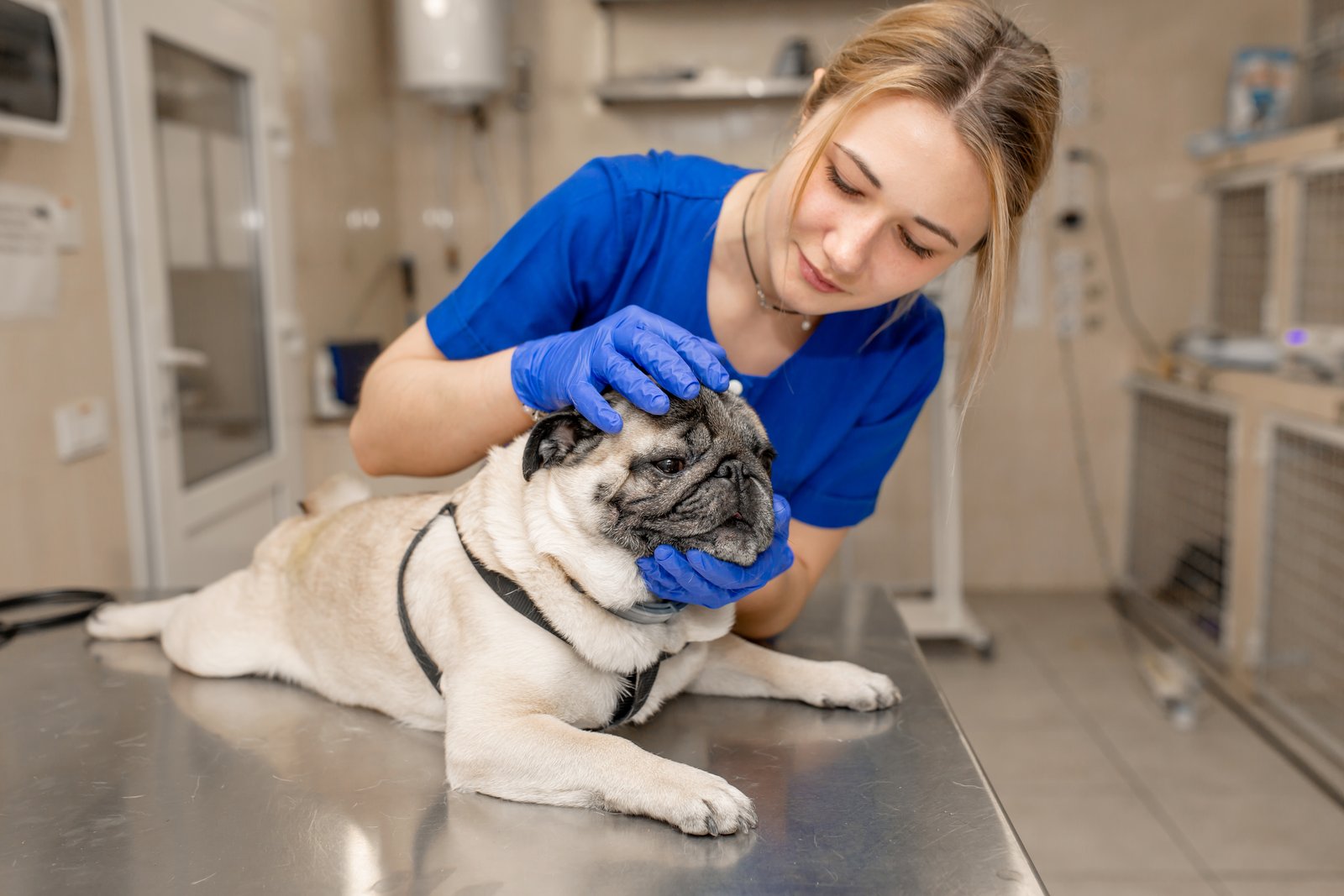
Pugs, French bulldogs, and English bulldogs have a certain charm that comes with their smushed faces and snuffly breathing, but that same anatomy makes something as routine as a dental cleaning carry extra weight. Anesthesia is one of the moments when a flat-faced dog’s airway can turn a simple procedure into a more delicate one, and knowing why can help you feel more prepared going in.
At Montclair Veterinary Associates, we treat a large number of brachycephalic patients, and we build our anesthetic protocols around the specific risks these breeds face. Below, we explain what makes flat-faced dogs different under anesthesia and how we work to keep every visit as safe as possible for your flat-faced companion.
What Makes Flat-Faced Breeds Different Under Anesthesia?
Brachycephalic breeds are built with shortened skulls, which means the same amount of soft tissue, airway, and palate that a longer-nosed dog has gets packed into a much smaller space. This crowding narrows the nostrils, lengthens the soft palate, and can even affect the larynx, all of which restrict airflow well before anesthesia is ever involved. Once anesthesia is introduced, those restrictions become more significant, since sedation relaxes the muscles that normally help hold the airway open.
A dog who already struggles to move air efficiently has far less reserve when that muscle support is reduced. A 2020 study published in the Journal of the American Veterinary Medical Association found that brachycephalic dogs who had undergone corrective airway surgery experienced fewer complications during later anesthetic events than those who had not, highlighting how much airway anatomy drives anesthetic risk in these breeds. We consider this airway anatomy at every step of pre-anesthetic care, not just during the procedure itself.
Breathing Patterns Are an Early Warning Sign
Breathing issues are often the clearest sign that a flat-faced dog may need extra monitoring during anesthesia. Dogs who snore heavily, tire quickly on walks, or struggle in warm weather are often the same dogs who need a more cautious anesthetic plan, since those symptoms point to an airway that is already working harder than it should.
We take a close look at these patterns whenever we evaluate a patient’s breathing and airway health before recommending any procedure that requires sedation.
How We Reduce Anesthesia Risk for Flat-Faced Patients
Every flat-faced patient who comes through our doors receives a pre-anesthetic workup tailored to their airway. We review bloodwork, listen closely to breathing patterns, and factor in any history of overheating or exercise intolerance before deciding on a sedation plan. This allows us to anticipate airway challenges instead of reacting to them once a dog is already under anesthesia.
We also adjust monitoring and recovery protocols specifically for brachycephalic patients, since many complications happen during the recovery period rather than during the anesthesia itself, when muscle tone is still returning and the airway is most vulnerable. Our team keeps these patients under closer watch for longer, checking oxygen levels and breathing effort well past the point where a longer-nosed dog would typically be cleared to go home.
We consider a few key factors when planning sedation and recovery for flat-faced patients:
- Airway anatomy: How narrow the nostrils and soft palate are, and how much they restrict airflow at rest, are reviewed.
- Weight and body condition: Extra weight adds pressure to an already narrow airway.
- Skin fold health: Skin issues common in these breeds can add stress around a procedure.
- Heat and exercise tolerance: A history of overheating or tiring quickly signals a more compromised airway.
Looking at the whole patient this way, rather than the airway alone, shapes how long we monitor recovery and how cautious we are with sedatives for procedures like spaying and neutering or soft tissue surgery.
Get the Care Your Pet Deserves from Montclair Veterinary Associates
You know your dog’s normal breathing patterns better than anyone, so sharing their detailed history with us before a procedure truly helps. Let us know if your dog has ever struggled in heat, needed to stop during walks, or made unusual breathing sounds even at rest, since these details influence how we approach sedation.
We understand that scheduling anesthesia for a brachycephalic dog can feel more stressful than it does for other breeds, and that worry is valid. At Montclair Veterinary Associates, our team’s experience with flat-faced patients means we know what to watch for and how to prepare, so you are not navigating these decisions alone. If your flat-faced dog has an upcoming procedure or you would like to discuss their anesthetic risk ahead of time, contact our office, and we will fully guide you through exactly how we will care for them.