
Every snort, wheeze, and labored breath your flat-faced pet makes may seem endearing, but for Bulldogs, Pugs, Persian cats, and other brachycephalic breeds, those sounds can signal something far more serious than a personality quirk. Brachycephalic airway syndrome is one of the most common and underrecognized health challenges affecting these beloved breeds, and it can range from mild discomfort to a life-altering breathing disorder that worsens with age.
At Montclair Veterinary Associates, we understand how much your pet means to you, and we know recognizing a problem early makes all the difference. Led by Dr. Cory Waxman, a University of Pennsylvania School of Veterinary Medicine graduate who has been caring for pets in Northern NJ since 2011, our team works closely with owners of flat-faced breeds to assess their respiratory health and develop a plan to keep them comfortable. Routine health examinations are often the first step in identifying breathing concerns before they escalate.
What Is Brachycephalic Airway Syndrome?
Brachycephalic airway syndrome (BAS) is a group of anatomical abnormalities found in flat-faced breeds that collectively restrict airflow through the upper respiratory tract. The word “brachycephalic” refers to the shortened skull structure that gives these animals their distinctive facial appearance, but that same structure can compress the airway, causing significant breathing difficulty.
The Anatomical Components
Several structural abnormalities typically work against your pet simultaneously. According to the American College of Veterinary Surgeons, the most common components include stenotic nares (abnormally narrow nostrils), an elongated soft palate that partially blocks the throat, a hypoplastic trachea (narrowed windpipe), and everted laryngeal saccules. Not every animal has all four, but many brachycephalic pets have more than one, and their combined effects compound the difficulty of breathing with each passing year.
In dogs, Bulldogs, Pugs, French Bulldogs, and Boston Terriers are among the most commonly affected breeds. In cats, Persians and Exotic Shorthairs carry similar anatomical risks. What makes BAS particularly challenging is that these animals have often lived with restricted breathing their whole lives, leaving owners unaware that their pets’ baselines are already abnormal.
Warning Signs to Watch For in Flat-Faced Pets
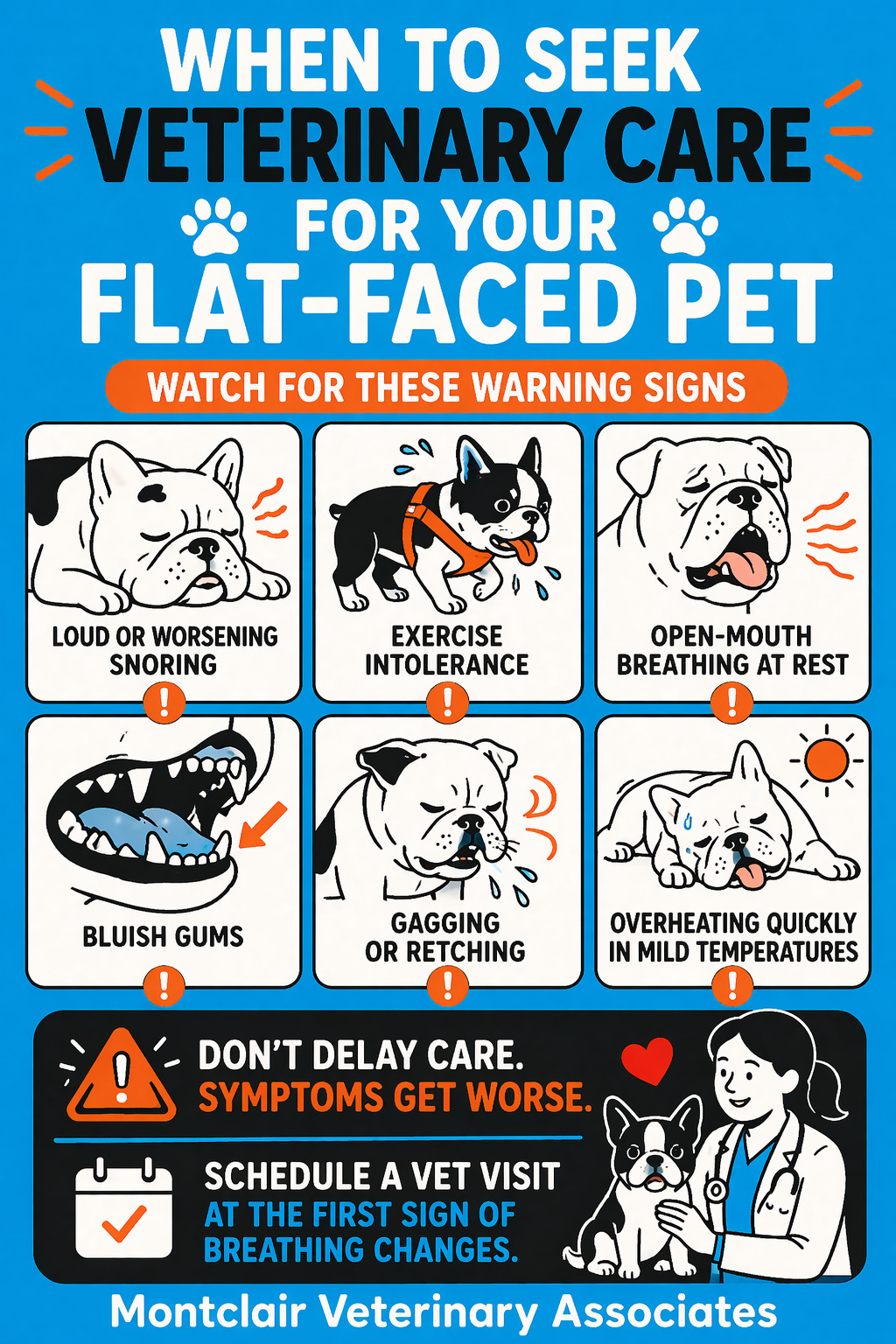
Owners of brachycephalic breeds often become accustomed to their pets’ noisy breathing, but certain signs indicate that the condition is progressing and veterinary attention is needed. These changes are worth taking seriously, as they point to real physical discomfort your pet may be masking.
The following signs suggest your brachycephalic pet’s breathing may be more than just a quirk:
- Loud, persistent snoring: Noisy breathing during sleep that has become louder or more frequent over time
- Exercise intolerance: Tiring quickly on short walks or refusing physical activity altogether
- Open-mouth breathing at rest: Cats, especially, should never breathe through their mouths when calm
- Cyanosis (bluish gums): A sign of dangerously low oxygen that requires immediate veterinary attention
- Gagging or retching: Occurs when the elongated soft palate interferes with swallowing
- Heat sensitivity: Overheating rapidly, even in mild temperatures, as panting is far less effective with a compromised airway
Any of these signs warrants a conversation with your vet. Our team is experienced in evaluating common pet illnesses across Northern NJ, and we take brachycephalic airway concerns seriously rather than dismissing them as breed-typical.
When to Seek Veterinary Care
Many pet owners delay seeking help because they’ve been told snoring and labored breathing are just part of owning a flat-faced breed. That framing, while common, leads to delayed diagnoses and preventable suffering. If your pet shows any of the warning signs listed above, or if you’ve simply noticed a change in their breathing patterns, it is time to schedule an evaluation. It also helps to know the broader signs your pet is in pain, as chronic breathing difficulty is physically exhausting and uncomfortable for your animal long before it becomes obvious.
Diagnosis and Treatment Options
Diagnosing brachycephalic airway syndrome begins with a thorough physical examination and review of your pet’s history. We use in-house diagnostics, including imaging and lab work, to get a complete picture of your pet’s respiratory health and rule out other contributing conditions. Treatment depends on severity. Mild cases may be managed with weight control, environmental adjustments, and careful monitoring, while more advanced cases often benefit from surgical correction. Our soft tissue surgical services are well-suited to address the anatomical corrections many brachycephalic pets need to breathe more comfortably and live fuller lives.
Breathe Better With Montclair Veterinary Associates
Dr. Waxman’s background spans biochemistry, veterinary medicine, and conservation work with endangered feline and canine species at both Northwestern University and the University of Pennsylvania. That depth of experience directly informs how we evaluate and care for flat-faced pets at our practice, ensuring nothing gets overlooked during your pet’s assessment.
If your Bulldog, Pug, Persian, or other brachycephalic pet has you concerned about their breathing, we are here to help. Reach out to our team through our contact form to schedule an appointment and get your pet the thorough evaluation they deserve.