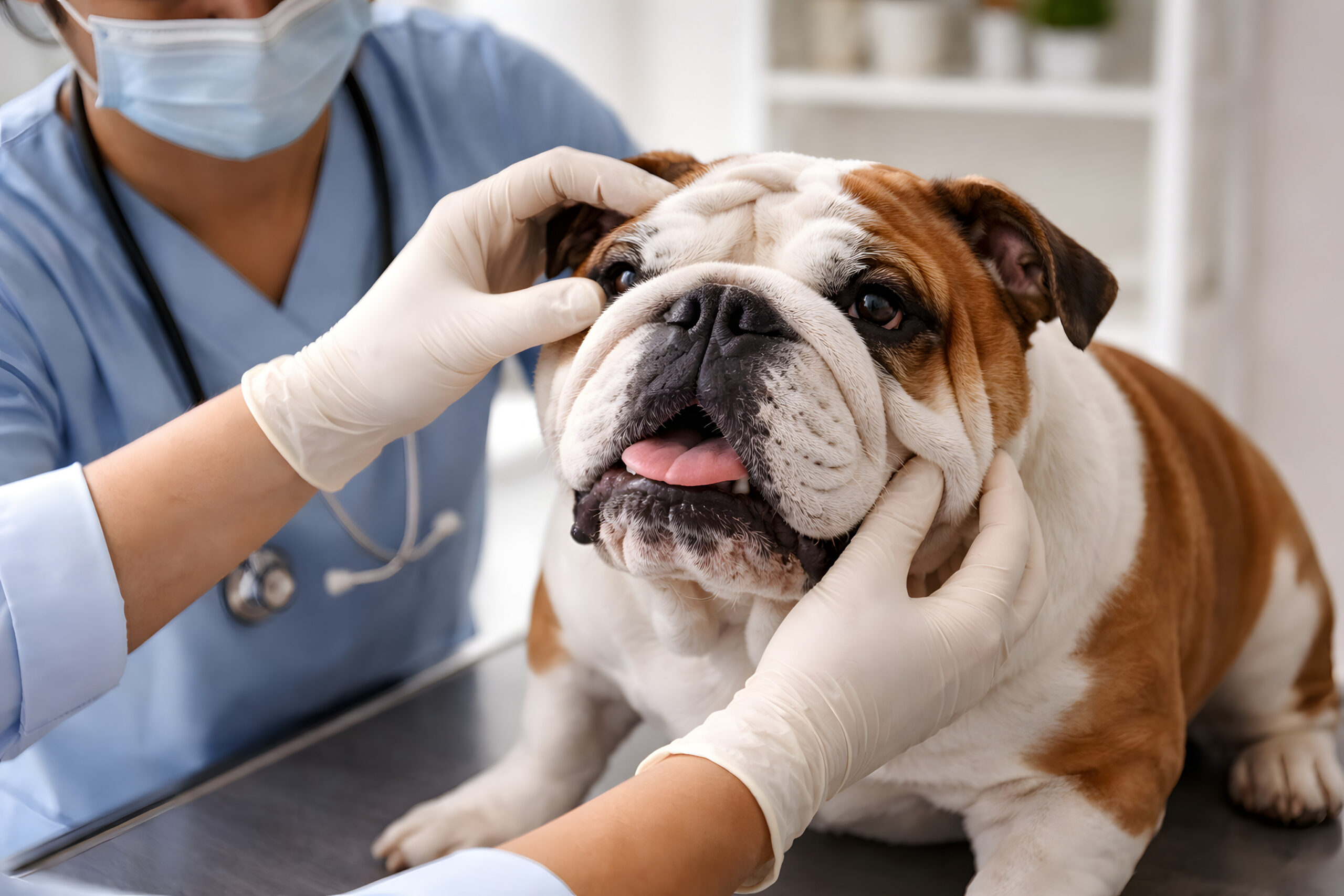
A wrinkled muzzle is one of the most recognizable features on a Bulldog, a Pug, or a Persian cat, and it is also one of the most overlooked sources of skin trouble these pets face. Underneath those folds, warmth and moisture collect in ways that flat skin never has to manage, and that hidden environment is exactly where bacteria and yeast start to take hold.
At Montclair Veterinary Associates, we see this pattern show up again and again in flat-faced dogs and cats across Northern New Jersey, usually right when an owner assumes a little redness will clear up on its own. Our dermatology care weaves fold checks into every wellness visit for brachycephalic breeds, because the same anatomy that gives these pets their signature look also gives their skin unique needs. Catching irritation early is the difference between a quick cleaning routine at home and a course of medication at our office.
Why Flat-Faced Pets Are Prone to Skin Fold Infections
Bulldogs and Pugs carry deep facial folds around the nose and eyes, along with corkscrew tails that create another hidden pocket of skin. Persian cats share the same flattened facial structure, so their nasal and eye folds are just as vulnerable, even though cat skin problems receive far less attention than dog skin problems do. A 2022 veterinary study tracking nearly one million dogs found brachycephalic breeds were roughly four times more likely to develop skin fold dermatitis than dogs with an average muzzle length, with English Bulldogs and Pugs among the breeds most affected, and facial fold dermatitis was the single most common presentation among those cases. This is not only a cosmetic concern, because an untreated fold infection causes pain, odor, and hair loss, and it tends to recur unless the underlying fold gets cleaned on a regular basis.
Many owners already watch for the breathing challenges common in flat-faced dogs, but skin folds deserve the same attention because both problems trace back to the same compact facial structure. Reviewing our guide to flat-faced breeds is a good next step for any owner who wants the full picture of what these pets need day to day.
Building a Daily Skin Fold Care Routine
A simple daily routine keeps most fold infections from ever starting, and it takes only a few minutes once it becomes a habit for you and your pet.
- Clean: wipe each fold daily with a damp, soft cloth or a vet-approved wipe to remove trapped debris, tears, and drool.
- Dry: pat the area completely dry afterward, because leftover moisture undoes the benefit of cleaning in the first place.
- Inspect: check folds weekly for redness, odor, or discharge not present the week before.
- Trim: keep the hair around deep folds short so air can actually reach the skin underneath.
This routine works alongside regular grooming and is not meant to replace a professional cleaning once irritation has already set in.
When Fold Irritation Needs a Veterinary Visit
Redness, a foul smell, or a pet pawing repeatedly at its face all signal an infection has already started, and home cleaning alone will not resolve it at that point. Bring your pet in as soon as you notice these signs, because fold infections tend to worsen quickly, especially during the warm months. During a visit, we can also review whether your pet is due for one of our routine wellness exams, which catch fold problems long before an owner would notice anything at home.
Skin fold infections in Persian cats often get missed because so much attention goes toward brachycephalic dog breeds. Our overview of skin problems in dogs and cats covers both species, so cat owners have access to the same guidance dog owners already rely on. Reaching out early keeps a minor fold irritation from turning into a deeper infection that requires ongoing medication.
Trust Montclair Veterinary Associates With Your Flat-Faced Pet’s Skin Health
Bulldogs, Pugs, and Persian cats bring plenty of personality into a home, and a little extra fold care keeps that personality shining without the discomfort of a hidden infection. Dr. Cory Waxman, a University of Pennsylvania School of Veterinary Medicine graduate who has treated pets across Northern New Jersey for over a decade, understands the anatomy that makes brachycephalic breeds different from every other patient we see. Our practice also offers in-house lab work, so if a fold infection turns out to be linked to allergies or another condition, we can investigate further during the same visit.
Whether your pet needs a first fold check or ongoing care for a recurring infection, our team builds a plan around your pet’s exact conformation and daily routine. Reach out through our contact form to schedule a visit and give your flat-faced companion the skin care their folds actually need.