
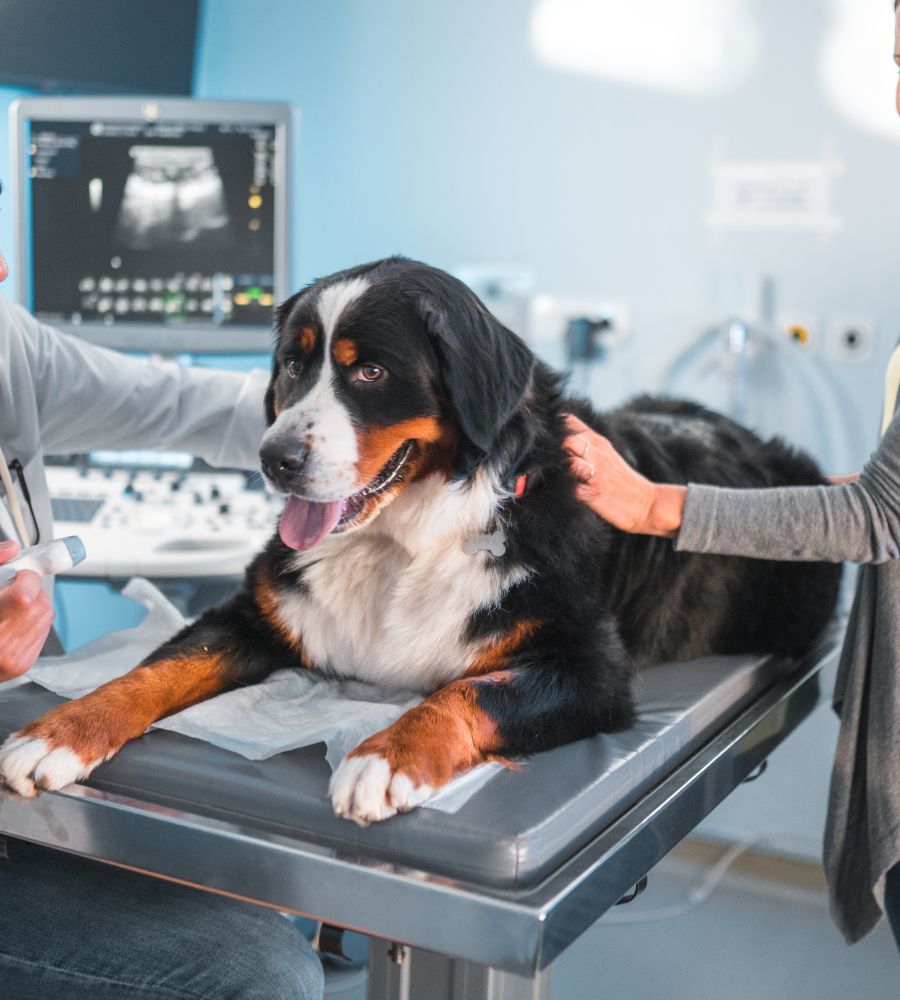
Pet Ultrasonography Consults in Montclair, NJ
Your pet can’t tell you where it hurts. They can’t describe a dull ache in their abdomen or tell you something feels off in their chest. That’s where diagnostic imaging steps in — and of the tools available to veterinarians today, ultrasound is one of the most valuable. It’s painless, radiation-free, and gives real-time information about what’s happening inside your pet’s body without the need for surgery or invasive procedures.
At Montclair Veterinary Associates, we offer pet ultrasonography consults as part of our comprehensive veterinary services in Montclair, NJ. Dr. Cory Waxman has been caring for pets in Northern NJ since 2011, and our practice brings in trained ultrasonographers with state-of-the-art equipment to perform these exams — giving you faster answers and more targeted care for your companion.
Ultrasound Technology in Veterinary Medicine
Ultrasound, also referred to as ultrasonography, uses high-frequency sound waves to create real-time images of your pet’s internal organs. According to VCA Animal Hospitals, ultrasound waves can assess the size, texture, and shape of organs and tissues by providing a two-dimensional image — and unlike X-rays, the technique involves no radiation, making it a safe and repeatable diagnostic option.
What ultrasound can evaluate:
murmurs, valve disease, pericardial fluid
stones, masses, fluid accumulation
enlargement, lesions, abnormal texture
wall thickening, foreign bodies, motility
guided fine needle aspiration
fetal viability, positioning & growth
Unlike an in-house X-ray, which is ideal for evaluating bones and dense structures, ultrasound is better suited for soft tissues and fluid-filled structures — making the two tools complementary rather than interchangeable.
When Is a Pet Ultrasound Recommended?
We may recommend a pet ultrasound when bloodwork reveals abnormal values, when urine test results are inconclusive, or when a mass is felt during a physical exam. Ultrasound allows us to examine internal structures with precision, supporting accurate diagnosis of digestive disorders, urinary issues, endocrine diseases, and more.
In addition to general abdominal imaging, we provide echocardiograms for evaluating heart conditions. Conditions such as heart disease, organ enlargement, and fluid around the pericardial sac can be effectively diagnosed with this approach, often without the need for sedation or general anesthesia.
Advanced Imaging Capabilities and Veterinary Expertise
Our practice is supported by trained ultrasonographers and visiting specialists who bring specialized skill to each exam. We also offer ultrasound-guided fine needle aspiration to sample abnormal tissue, lymph nodes, or internal organs for further testing. These minimally invasive procedures gather diagnostic samples with precision, minimizing discomfort and risk to your pet.
For pets managing chronic illnesses such as kidney disease, liver conditions, or heart disease, repeat ultrasound imaging provides an invaluable window into how a condition is progressing and whether treatment is working as expected.
Safe, Comfortable Procedures Without the Need for Anesthesia
Most ultrasounds can be performed while your pet is awake, resting comfortably on a padded surface. Since it is a non-invasive imaging technique, there is usually no need for general anesthesia unless the patient is particularly anxious or the procedure requires absolute stillness. A small area of fur may be shaved to allow proper contact between the skin and the ultrasound probe.
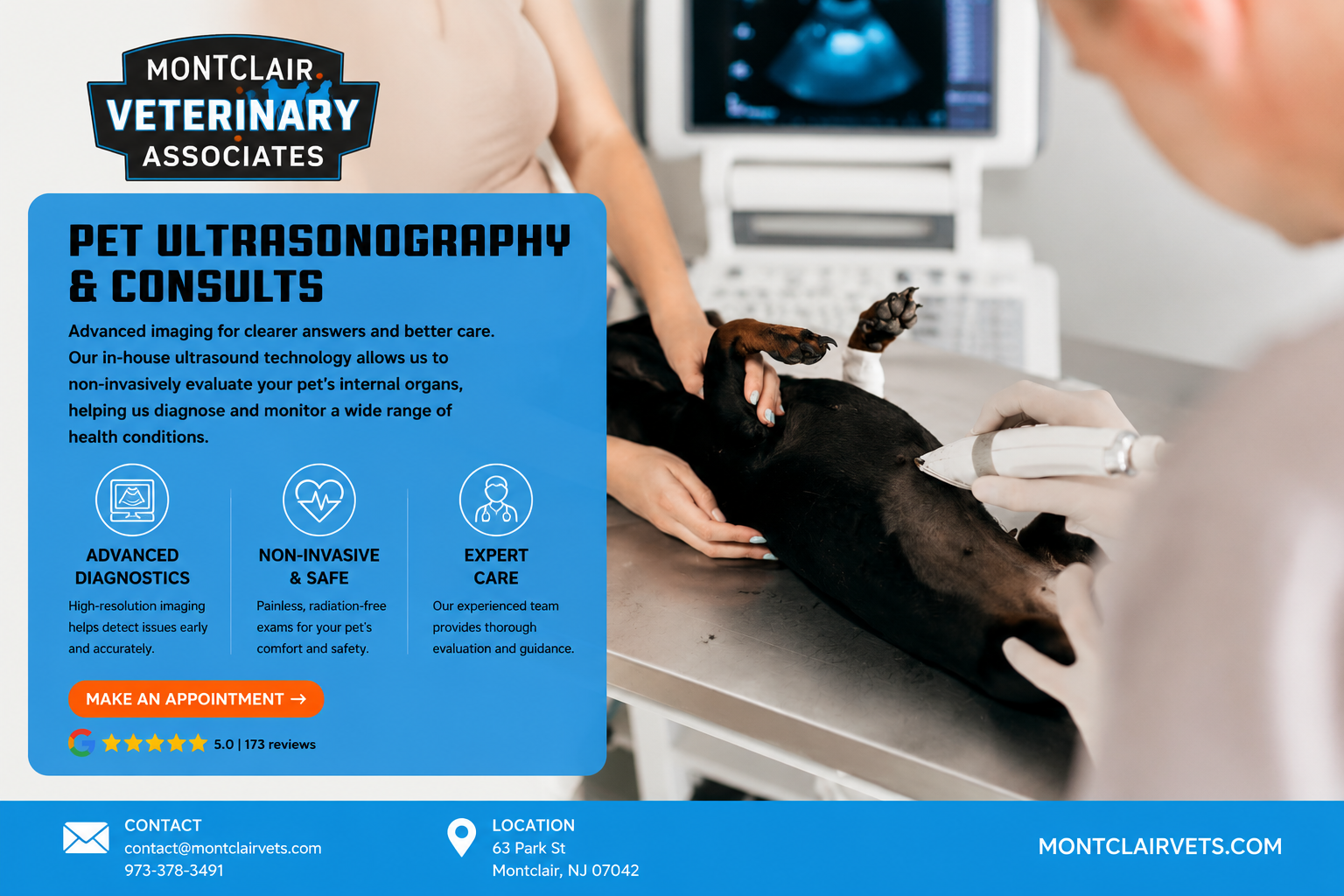
From start to finish, our veterinary team ensures your pet remains calm and comfortable. Results are typically available the same day, allowing us to make timely decisions about treatment or further testing.
Pregnancy Diagnosis and Reproductive Health
One of the most common uses of ultrasound in veterinary medicine is pregnancy diagnosis. Using real-time imaging, we can monitor fetal development, detect complications, and provide pet owners with peace of mind during a pet’s pregnancy. This is especially helpful in breeding animals or when an accidental pregnancy is suspected.
Ultrasound allows us to visualize individual fetuses, assess their viability, positioning, and growth over time. As a non-invasive and painless option, it is ideal for ongoing monitoring of both the mother and unborn litter without disrupting normal biological processes.
Diagnostic Imaging Services We Provide
At Montclair Veterinary Associates, our full diagnostic imaging suite includes the following services. Each is designed to deliver timely insights with minimal stress to your pet.
- Abdominal ultrasound — including abdominocentesis and cystocentesis procedures
- Thoracic ultrasonography — and thoracocentesis to evaluate the chest cavity
- Doppler ultrasound studies — for assessing blood flow and heart function
- Echocardiogram — for identifying heart disease and structural abnormalities
- Digital radiography (X-ray) — for evaluating bone injuries or lung conditions
Whether we are investigating unexplained symptoms or guiding treatment for a long-term condition, our goal is always to provide an accurate diagnosis and compassionate care.
Pet Ultrasonography Consults at Montclair Veterinary Associates
Dr. Cory Waxman and our team understand that waiting for answers about your pet’s health is stressful. That is why we invest in the equipment and expertise needed to get you those answers quickly. Dr. Waxman earned his degree from the University of Pennsylvania School of Veterinary Medicine and has been treating pets across Northern NJ since 2011, building a reputation for thorough, compassionate diagnostics. To learn more about our team and approach, visit our about page.
If your pet is showing signs of illness, has abnormal lab results, or is due for an imaging evaluation, we are here to help. Contact our office today to schedule a pet ultrasound consult in Montclair, NJ.

Montclair Veterinary Associates
Get answers for your pet today
Questions about a pet ultrasound? Our team is ready to help — every step of the way.
Frequently Asked Questions About Pet Ultrasonography
What is an ultrasound for pets, and how does it work?
An abdominal ultrasound is often recommended when your pet shows signs of digestive issues, weight loss, or abnormal lab results like abnormal blood values or suspicious urine test results. This test allows us to examine the liver, spleen, bladder, kidneys, and intestines in detail. It helps effectively diagnose growths, inflammation, blockages, or other abnormalities in your pet’s internal organs that may not appear on an X-ray.
When would my pet need an abdominal ultrasound?
When your pet is brought to an animal shelter or veterinary clinic as a lost animal, staff scan between the shoulder blades for a microchip using a handheld reader. If a chip is found, the unique ID number is cross-referenced against national registries to locate the registered owner. This process typically takes seconds — but it only works if your contact information in the registry is current. We recommend confirming your pet’s microchip registration is up to date at every annual wellness visit.
Does my pet need anesthesia for an ultrasound?
In most cases, ultrasound for pets does not require general anesthesia or even a heavy sedative. The procedure is non invasive, painless, and typically well-tolerated by pets. Your pet will lie on a cushioned surface while a small area of fur is shaved to allow for proper probe contact. Sedation may be used if your pet is anxious or if complete stillness is required for accurate diagnosis.
What types of conditions can a pet ultrasound help diagnose?
A pet ultrasound can help detect a wide range of issues including heart disease, liver and kidney problems, tumors, cysts, abnormal tissue, and fluid around the pericardial sac. It’s also useful for pregnancy diagnosis, evaluating lymph nodes, and guiding needle aspirates for further testing. This non-invasive tool is a cornerstone of veterinary medicine and is often used alongside other imaging techniques like X-ray.
Who performs the ultrasound and reads the results?
At Montclair Veterinary Associates, ultrasound examinations are conducted by trained ultrasonographers using advanced ultrasound technology. In some cases, a visiting veterinary radiologist assists in capturing or interpreting complex images. Our team works together to ensure an accurate diagnosis, and results are usually available the same day to help guide timely treatment decisions for your pet.
