
There’s something undeniably endearing about a smushed face, deep nose rolls, and those dramatic wrinkles that make bulldogs, pugs, and French bulldogs so instantly recognizable. But beneath those adorable folds lies a hidden challenge: skin fold dermatitis, a condition that quietly develops in the warm, moist crevices of a brachycephalic dog’s face, body, and tail area. Without consistent care, those folds can become painful hotspots for bacterial and yeast infections, affecting your pet’s comfort and quality of life.
At Montclair Veterinary Associates, we work with many owners of brachycephalic breeds throughout Northern New Jersey who want to get ahead of these issues before they escalate. Led by Dr. Cory Waxman, a University of Pennsylvania School of Veterinary Medicine graduate with over a decade of experience treating pets in the area, our team helps you build practical care routines to keep skin-fold problems under control.
Why Brachycephalic Breeds Are Prone to Skin Fold Issues
Brachycephalic dogs, including English bulldogs, French bulldogs, pugs, Boston terriers, and Shar-Peis, have been selectively bred for their compact facial features. While those features are endearing, they create anatomical conditions that promote skin irritation. The folds trap heat, moisture, and debris, forming an environment where bacteria and yeast thrive.
The Most Common Problem Areas
The face is the most frequently affected area, particularly the nose roll and the folds around the muzzle. However, skin fold dermatitis can develop anywhere overlapping skin creates a pocket, including the neck, armpits, groin, and the area around the tail. The friction between skin surfaces, combined with trapped moisture, makes these regions especially vulnerable to infection.
A 2022 study published in Nature Scientific Reports found the prevalence of skin fold dermatitis in brachycephalic breeds was nearly four times higher than in other dog breeds, with English bulldogs, French bulldogs, and pugs showing the greatest risk of diagnosis.
Building a Daily Cleaning Routine
Preventing skin fold infections starts with a routine you can maintain every day. Regular cleaning removes debris, discharge, and moisture that accumulate in the folds before they have a chance to cause problems.
What to Use and How Often
Use a veterinarian-approved wipe or a soft cloth dampened with a gentle, pet-safe cleanser. Gently open each fold, wipe from the inner crease outward, and thoroughly dry the area afterward. Moisture left behind is just as problematic as the debris you’re removing, so drying completely is a critical step. Most dogs benefit from once-daily cleaning, though particularly deep or problematic folds may require attention twice a day.
Effective fold care products include antiseptic wipes formulated for pets, chlorhexidine-based medicated cleansers, and petroleum-based barrier balms designed to protect skin between cleanings. These are widely available and worth discussing with your veterinarian to find the right fit for your dog’s specific anatomy and skin sensitivity. Staying consistent with pet routine health examinations also helps our team catch early signs of irritation before a full infection develops.
Recognizing the Signs of a Skin Fold Infection
Even with a solid cleaning routine, infections can still occur. Knowing what to look for allows you to act before the situation becomes significantly more uncomfortable for your dog.
Warning Signs to Watch For
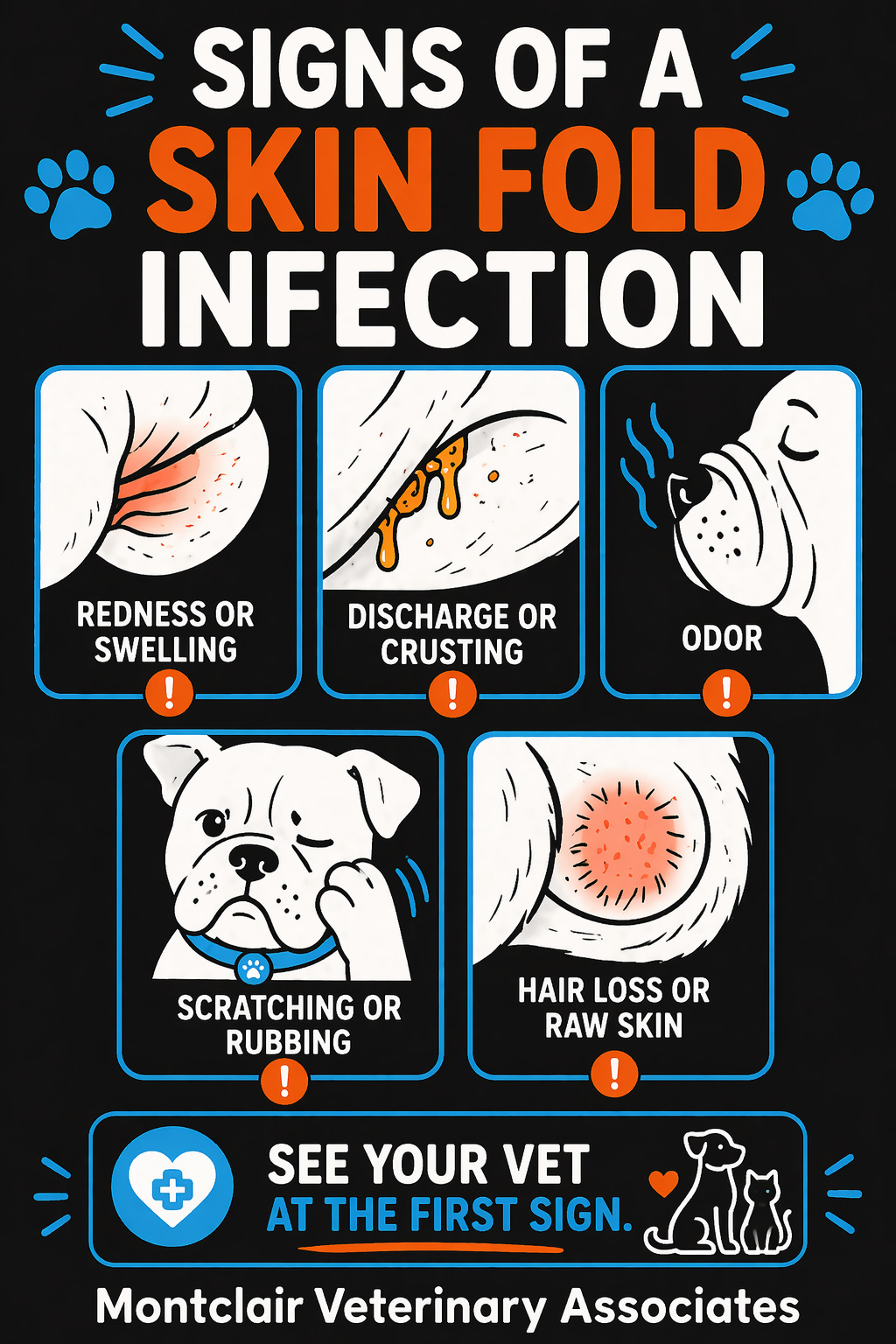
The following signs indicate a skin fold infection may be developing, and any one of them warrants a closer look from your veterinarian.
- Redness or swelling: Inflammation inside a fold that was not there before
- Discharge or crusting: Brownish, yellowish, or dark discharge accumulating in or around the crease
- Odor: A sour, musty, or yeasty smell coming from the fold
- Excessive scratching or rubbing: Your dog pawing at their face or rubbing it along surfaces
- Hair loss or raw skin: Visible damage to the skin within the fold
Dogs with skin fold infections often show subtle signs of pain, and early intervention makes treatment more straightforward and less stressful for everyone involved.
When Skin Fold Dermatitis Becomes a Chronic Concern
For some brachycephalic dogs, skin fold issues are not a one-time problem but an ongoing challenge requiring long-term management. Repeated infections can lead to skin thickening, hyperpigmentation, and progressive discomfort if the root cause is not addressed.
Chronic skinfold dermatitis may require prescription topical or oral medications, antifungal treatments, or dietary changes if allergies contribute to inflammation. In cases where the anatomy of the folds itself is creating unavoidable irritation, your veterinarian may discuss surgical correction as a longer-term solution. Managing chronic pet illnesses is something we approach comprehensively, combining diagnostics and ongoing care to find the most effective path forward for your pet. In some cases, pet bloodwork can help identify underlying conditions, such as hypothyroidism or allergies, that can make your dog more susceptible to recurring infections.
Schedule a Visit at Montclair Veterinary Associates
If your brachycephalic dog is struggling with skin fold irritation, or if you simply want to develop a prevention plan before problems arise, Dr. Waxman and the team at Montclair Veterinary Associates are here to help. Dr. Waxman’s background includes his internship at the Franklin Park Zoo and his research for the “Noah’s Ark” Project at Northwestern University and UPenn, and he brings that same depth of scientific curiosity to every patient he sees in Northern New Jersey.
We serve Montclair, Verona, Caldwell, and surrounding communities, offering personalized, locally owned veterinary care for pets of every shape and wrinkle. Reach out through our contact form to schedule an appointment, and let’s put together a skin fold care plan to keep your dog comfortable year-round.