Bringing your pet home after a spay or neuter procedure can feel a little nerve wracking, especially if this is your first time going through it. Your dog or cat may seem groggy, uninterested in food, or simply not themselves for the first day or two, and that’s a completely normal part of recovering from anesthesia and surgery. Knowing what to watch for and how to support your pet through this short recovery window can make the process much smoother for both of you.
At Montclair Veterinary Associates, we help every pet owner know what to expect before they leave our office, and we remain available throughout the healing process to answer questions. This guide covers the first 24 hours, the following week or two of recovery, and the signs that mean you should call us right away.
The First 24 Hours at Home
The day of surgery is typically the hardest for your pet, though it rarely reflects how they will feel just a day later. Anesthesia can leave dogs and cats sluggish, wobbly, or unusually quiet, and some pets shiver or whine as the medication wears off.
Keep your pet in a warm, quiet space away from other animals and small children so they can rest undisturbed. Offer a small amount of water once they are alert, and hold off on a full meal until several hours after you get home, since nausea from anesthesia is common. If your pet has dog allergies or another health condition we manage regularly, mention it when you pick them up so we can tailor any additional care instructions.
Managing Activity During Recovery
Most pets need about 10 to 14 days of restricted activity following a spay or neuter procedure to allow the internal incision time to heal. During this window, avoid walks longer than a quick leash trip outside for bathroom breaks, and keep your pet away from running, jumping, or rough play with other animals.
This can be the hardest part of recovery for pet owners, particularly with young, energetic dogs who feel fine within a day or two but are not actually healed internally. A short leash, a crate, or a small confined room can help enforce rest even when your pet seems ready to go. Cats benefit from being kept indoors and away from cat trees or high perches during this time.
Certain breeds require extra attention during this stretch of recovery:
- Brachycephalic breeds such as bulldogs and pugs can have more sensitivity to anesthesia and may need closer monitoring of their breathing in the days following surgery.
- Large and giant breeds sometimes take slightly longer to fully heal and may need continued activity restriction beyond the typical two weeks.
- Small and toy breeds can be prone to chewing at their incision site sooner, since they can reach it more easily.
Our post on specialized care during spaying and neutering covers different breeds in deeper detail.
Caring for the Incision Site
Checking the incision once or twice a day is one of the simplest ways to catch a problem early. A healthy incision should look clean, with the edges lying flat against each other, and any swelling or redness should be minimal and gradually improving rather than worsening.
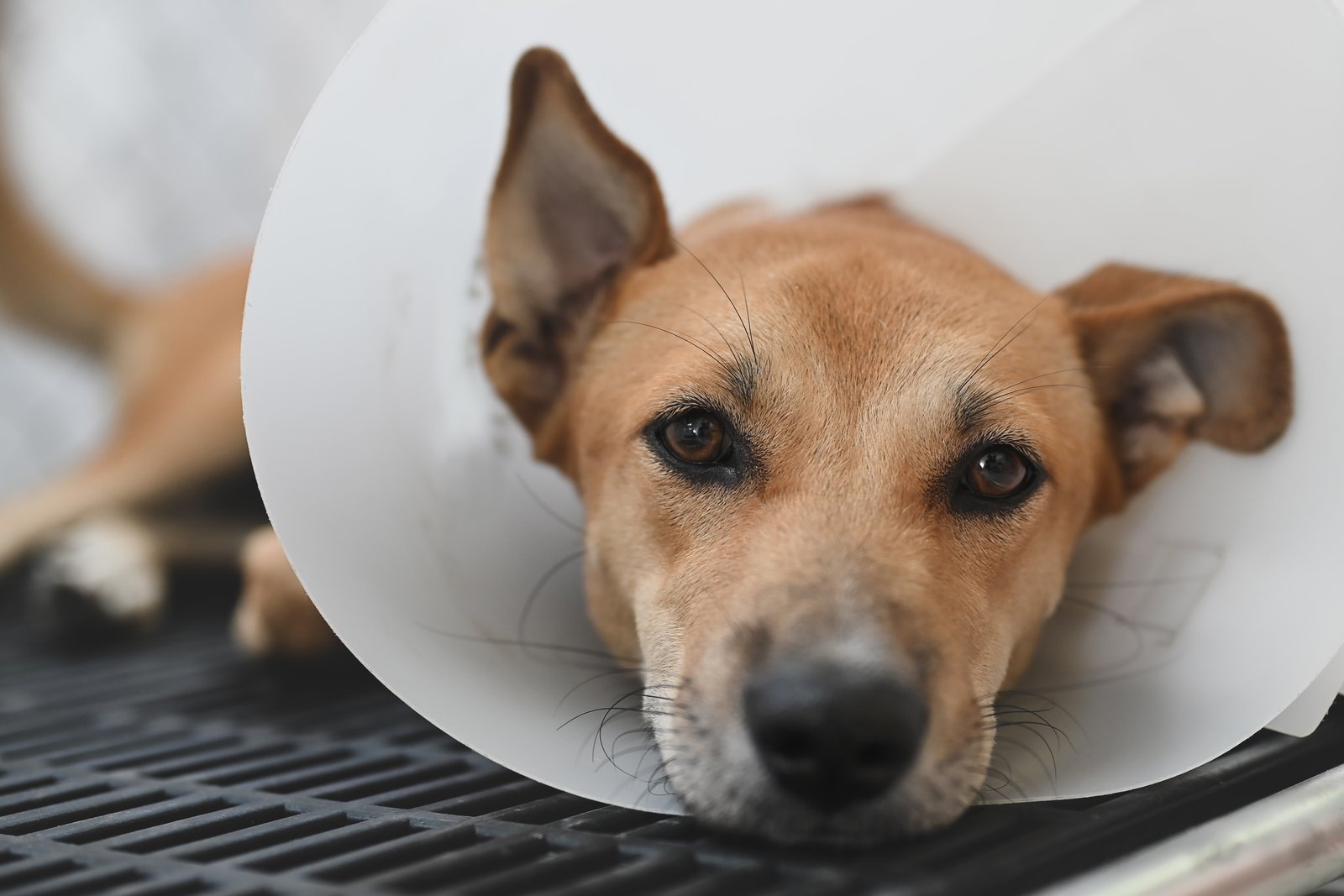
Your pet will likely go home wearing an e-collar or a recovery suit to prevent licking or chewing at the site. Saliva introduces bacteria, and repeated licking can reopen an incision that would otherwise heal without issue. Keep the collar on for the full recovery period we recommend, and avoid bathing your pet or letting the incision get wet until it has fully healed.
Warning Signs That Need Immediate Attention
Every pet heals a little differently, so having a clear sense of what is normal versus what isn’t gives you confidence throughout recovery. According to the American Veterinary Medical Association, anesthetized patients should be monitored closely, and any complications should be addressed quickly to give your pet the best chance at a full recovery.
Call us right away if you notice persistent vomiting or diarrhea beyond the first evening, your pet isn’t eating or drinking for more than 24 hours, visible discharge, bleeding, or a foul odor from the incision, or swelling that continues to worsen rather than improve. Most pets sail through recovery without any of these complications, and the vast majority of what you will see is simply a quieter, sleepier version of your normal companion for a few days. However, if something feels off, it is always worth a call rather than assuming it will resolve itself.
Supporting a Smooth Recovery With Montclair Veterinary Associates
Our team has been caring for pets throughout Montclair and the surrounding towns since 2011, and we know that the days following surgery can feel uncertain even when everything is going exactly as it should. We send every pet home with clear written instructions specific to their procedure, and we genuinely want you to call us with questions rather than wonder if something is normal.
If your pet is showing any of the warning signs above, or if you simply want reassurance that recovery is on track, contact our office and our team will help you through next steps or get you scheduled for a follow-up visit.