Bad breath in a dog or cat is usually the first sign of plaque and tartar building up along the gumline. Left alone, that buildup leads to gum disease, tooth loss, and infections that can spread beyond the mouth. Most pet owners want to help but aren’t sure which products actually make a difference and which ones are all hype.
At Montclair Veterinary Associates, we see the effects of skipped dental care every day, and we also see how much a consistent home routine can change the trajectory of a pet’s oral health. Below, we help you learn how to build a routine your dog or cat will tolerate.
Why Home Dental Care Matters Between Cleanings
Professional cleanings under anesthesia remove tartar that has already hardened onto the tooth surface, but they can’t undo the daily buildup that starts again almost immediately afterward. Plaque forms within hours of eating, and once it mineralizes into tartar, brushing alone won’t remove it. This is why what you do at home between those cleanings is so important.
According to the American Veterinary Dental College, periodontal disease is the most common clinical condition seen in adult dogs and cats. Pet owners often don’t realize there is a problem until a dog teeth cleaning reveals advanced disease, serving as a strong argument for daily prevention rather than reactive treatment.
What Actually Works for Brushing?
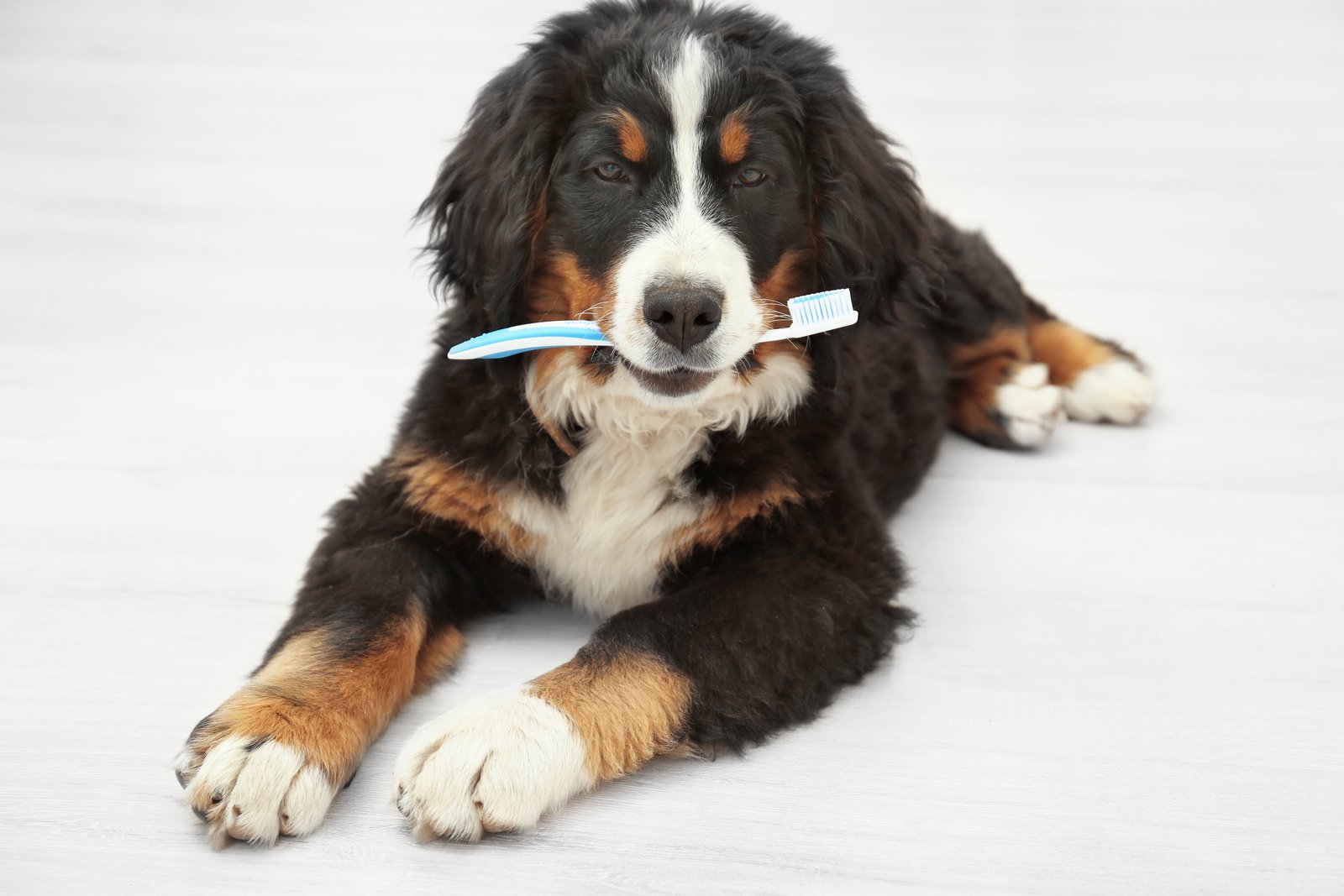
Daily brushing is the single most effective home dental care tool, but only if it’s done correctly and consistently. A soft-bristled pet toothbrush paired with enzymatic pet toothpaste, never human toothpaste, breaks down plaque before it has a chance to harden. Even brushing 30 seconds per side several times a week produces a significant difference over months.
Doing it regularly is more important than doing it perfectly. A pet that tolerates brushing three or four times a week will see better outcomes than one brushed once and then avoided out of frustration. Start slowly, using a fingertip brush before graduating to a bristled one, and pair each session with praise or a small reward so your pet associates brushing with something positive.
Introducing Brushing to a Resistant Pet
Cats and older dogs in particular can be difficult to introduce to brushing, and forcing the issue too quickly often backfires. We suggest a gradual approach, starting with simply touching the mouth and lips daily until the pet is relaxed with handling, then introducing the taste of the toothpaste on a finger, and only then moving to the brush itself. Rushing this process is the most common reason brushing routines fail within the first few weeks.
Products Worth Using and Products to Skip
Not every dental product on pet store shelves delivers on its claims, and some are more marketing than substance. Dental chews and treats that carry the Veterinary Oral Health Council (VOHC) seal have been tested to show a real reduction in plaque or tartar, which makes that seal worth checking before purchase. Water additives and dental diets formulated for oral health can also help as a supplement to brushing, though none of these replace brushing as the primary tool.
We generally advise caution with a few categories of products, including:
- Hard chew toys like antlers, hooves, or bones, which can fracture teeth
- Human toothpaste, which often contains xylitol and is toxic to pets
- Dental wipes used alone, since they clean less thoroughly than brushing
- Any product without VOHC certification claiming to eliminate tartar
Once a routine includes a brush, an appropriate toothpaste, and a VOHC-approved chew as backup, most pets are well covered between professional visits.
Watching for Signs That Home Care Is Not Enough
Even a strong home routine can’t catch everything, and there are signs that point to a problem beyond what brushing and chews can manage. Bad breath that persists despite regular brushing, visible tartar buildup along the gum line, bleeding gums, or a pet pawing at its face or dropping food are all reasons to schedule an exam rather than wait. Cats in particular can develop resorptive lesions that are painful and require professional evaluation, since these are not something a home routine can prevent or treat.
Senior pets often need more frequent professional monitoring alongside home care, since years of plaque exposure catch up even with a diligent owner, and conditions like resorptive lesions or advanced gum recession become more common. A pet dental care and cleaning evaluation can determine whether your pet’s home routine is sufficient or whether it is time for intervention.
Building a Routine That Actually Sticks
The pets who end up with the healthiest mouths are the ones with a simple routine repeated consistently, brushing several times a week, a VOHC-approved chew in rotation, and regular checkups that catch problems before they become painful. Perfection is not the goal, and missing a day here or there will not undo months of good habits.
At Montclair Veterinary Associates, Dr. Cory Waxman and our team have been treating pets throughout Northern New Jersey since 2011, and we know firsthand how much a manageable home routine changes long-term outcomes for dogs and cats. If your pet is overdue for an exam or you want guidance on building a dental routine that fits your household, reach out through our contact page and we will help you get started.