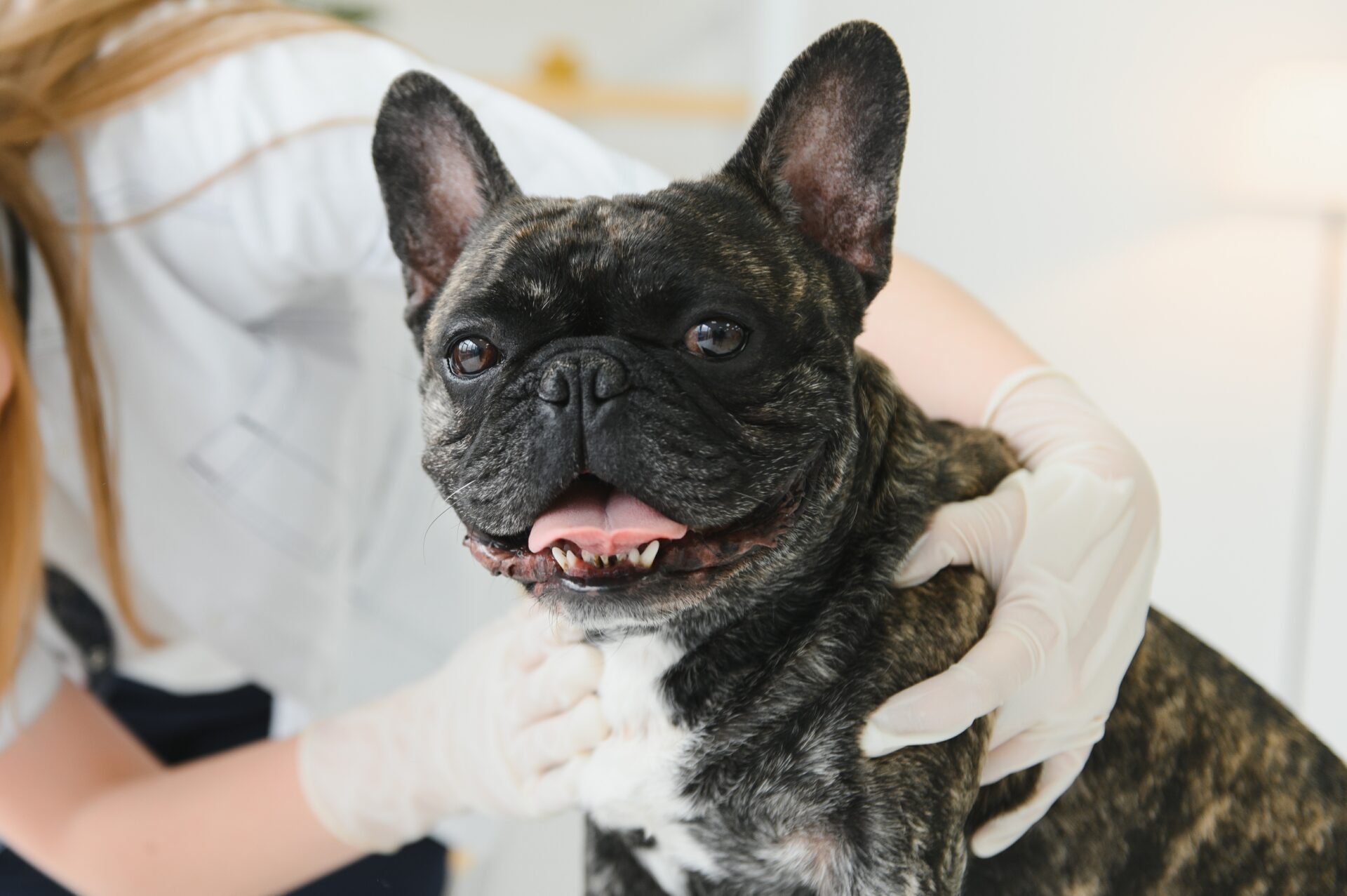
Your French Bulldog’s smooshed face is irresistible, but that same anatomy quietly sets the stage for one of the most underestimated health risks flat-faced dogs face: serious dental disease. Brachycephalic breeds, including Bulldogs, Pugs, Boston Terriers, Shih Tzus, and Cavalier King Charles Spaniels, carry all the same number of teeth as longer-snouted dogs, crammed into a dramatically shorter jaw. The result is persistent crowding, misalignment, and conditions that make routine dental problems far more severe.
At Montclair Veterinary Associates, Dr. Cory Waxman and the team bring more than a decade of experience caring for pets in Northern New Jersey, including many flat-faced patients. Dr. Waxman graduated from the University of Pennsylvania School of Veterinary Medicine and has a deep understanding of how breed anatomy shapes every aspect of a pet’s health, including what happens inside their mouth. Comprehensive dental care for brachycephalic breeds is not an optional add-on; for these dogs, it is a cornerstone of their long-term well-being.
Why Flat-Faced Dogs Face Greater Dental Risks
The defining feature of a brachycephalic dog is a shortened skull with a compressed facial structure. This compressed anatomy does not reduce the number of teeth. 42 adult teeth are still present in a jaw that simply was not designed to accommodate them. Crowding and rotation are the predictable outcomes, and both dramatically increase the difficulty of keeping those teeth clean.
Crowding creates tight spaces between teeth where plaque and tartar accumulate faster than brushing can address. Rotated teeth present surfaces that face inward or overlap, making them nearly impossible to clean effectively at home. A research study published by the National Institutes of Health found that brachycephalic dogs had 1.25 times the odds of periodontal disease compared to dogs with standard skull proportions, with the study’s authors highlighting periodontal disease as a priority welfare concern for predisposed breeds.
The Consequences of Untreated Dental Disease in Brachy Breeds
Dental disease in flat-faced dogs rarely stays confined to the mouth. When plaque and tartar are left to progress, gingivitis develops, followed by periodontitis, and eventually, tooth loss. What makes this especially concerning for brachycephalic breeds is that the crowding accelerates the timeline. A dog who might develop mild gingivitis over several years in a standard breed may show the same progression within months due to how tightly their teeth are packed together.
Tooth Root Infections
One of the more serious consequences of untreated dental disease is a tooth root abscess. When infection travels below the gumline and into the root, it can cause visible facial swelling and significant discomfort. For flat-faced breeds, where multiple teeth may be affected simultaneously due to crowding, root infections can become a recurring problem without consistent professional care.
Systemic Health Connections
The connection between oral health and systemic health is well-established in veterinary medicine. Bacteria from infected gum tissue can enter the bloodstream and create strain on the heart, kidneys, and liver over time. For flat-faced dogs already navigating a range of health considerations tied to their anatomy, adding chronic dental infection to that burden is something we work hard to help owners avoid.
What a Professional Dental Cleaning Accomplishes
At-home brushing plays an important role in dental maintenance, but it cannot do what a professional dental cleaning can. Professional cleanings allow us to scale beneath the gumline, probe for pockets of infection, take dental X-rays, and evaluate the full picture of what is happening below the visible surface. For brachycephalic breeds, dental X-rays are particularly valuable because rotated and crowded teeth can hide significant disease from a visual exam alone.
Here are the key components we assess and address during a dental cleaning for flat-faced dogs:
- Subgingival scaling: Removal of tartar and bacteria from beneath the gumline, where most damage from periodontal disease begins
- Dental radiographs: Full-mouth X-rays to identify bone loss, root infections, and abnormally positioned teeth not visible to the naked eye
- Probing and charting: Systematic evaluation of every tooth’s attachment to detect pockets that signal active disease
- Polishing and treatment planning: Smoothing enamel surfaces to slow future plaque accumulation and developing a home care plan tailored to the individual dog
These are not simply cosmetic steps. For a brachycephalic dog, this level of evaluation is the only way to catch problems early enough to address them before they require extraction or create systemic complications.
Partner With Montclair Veterinary Associates for Your Pet’s Dental Health
Flat-faced breeds require a veterinary team that understands their anatomy and anticipates the ways their structural differences shape their health needs. Montclair Veterinary Associates is a locally owned practice led by Dr. Cory Waxman, a University of Pennsylvania School of Veterinary Medicine graduate who has been caring for pets in Northern New Jersey for more than a decade. Our team is committed to comprehensive care for every patient, with a genuine understanding of what brachycephalic breeds need to thrive.
From routine dental cleanings to thorough oral evaluations and individualized home care guidance, we are here to ensure your flat-faced companion receives the attention their teeth require. Dental health is too important to leave to chance, and for these beloved breeds, staying ahead of disease is the best thing you can do for their quality of life. To schedule a dental evaluation for your pet, contact our office today.