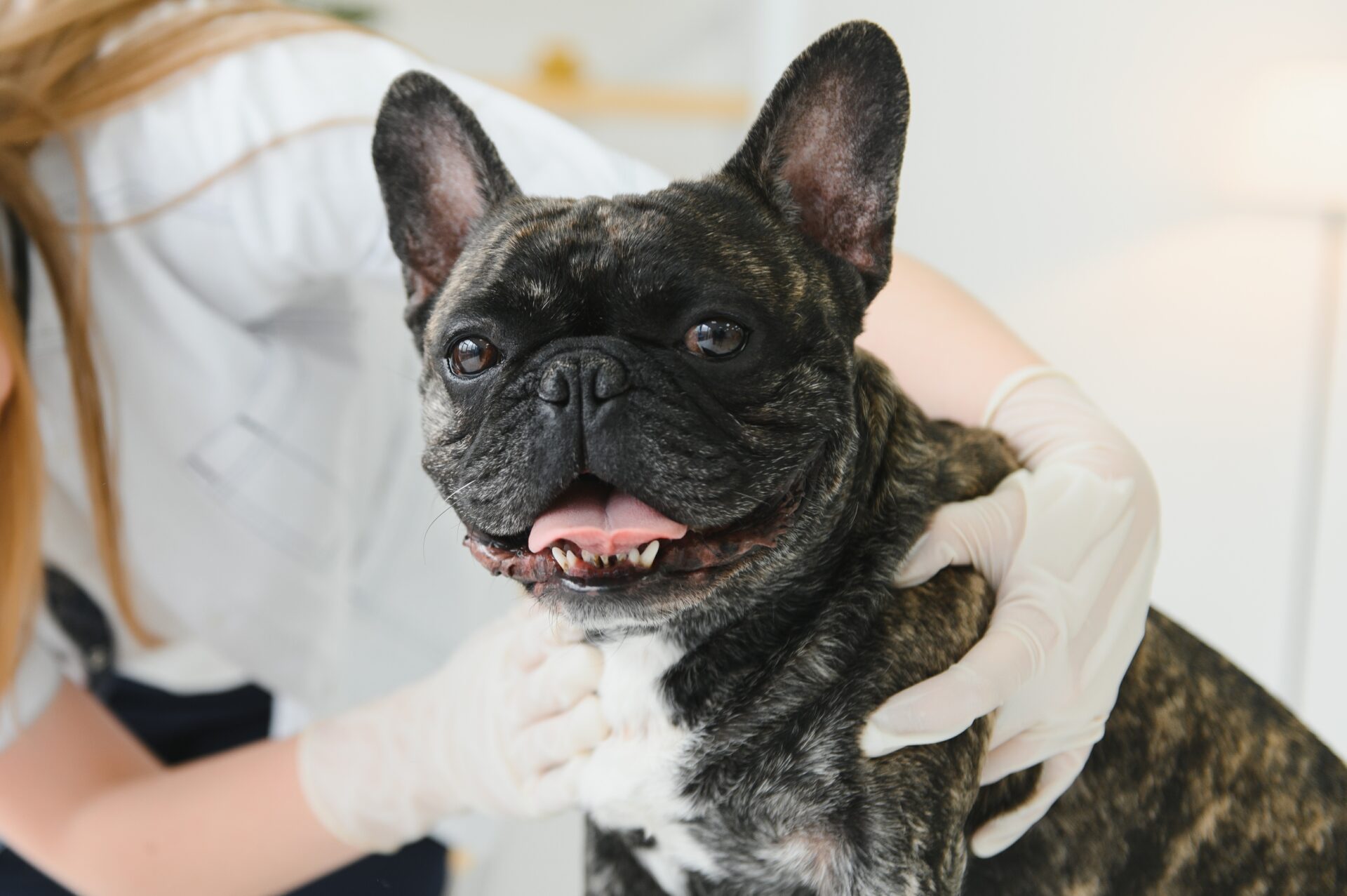
Few dogs stop people in their tracks quite like a French Bulldog or a Pug. That smushed face, the wide eyes, the little snuffle-snort as they trot across the room; brachycephalic breeds have a way of making everyone fall completely in love. They’re also among the most popular pets in the country, and with good reason. But loving them well means understanding how their anatomy shapes their health, their needs, and the kind of veterinary care that helps them thrive.
At Montclair Veterinary Associates, we have been caring for pets in Northern New Jersey since 2011, and brachycephalic dogs and cats are among our most frequent and beloved patients. Dr. Cory Waxman, who trained at the University of Pennsylvania School of Veterinary Medicine and has treated animals in this community for over a decade, brings a deep appreciation for what makes these breeds unique. Keeping up with pet routine health examinations is one of the most important things you can do to stay ahead of health challenges common in flat-faced pets.
What Does “Brachycephalic” Mean?
The word brachycephalic comes from the Greek for “short head,” and it describes dogs and cats whose skulls have been selectively bred to be shorter and wider than average. The result is that signature flat face. Common brachycephalic dog breeds include:
- French Bulldogs
- Pugs
- English Bulldogs
- Boston Terriers
- Shih Tzus
- Boxers
- Cavalier King Charles Spaniels
In the feline world, Persian and Himalayan cats share these traits.
The anatomy that gives these animals their distinctive look also creates a set of physical considerations that every owner should be aware of. Their airways, eyes, teeth, and skin folds all require a level of attention that goes beyond what you might expect with a longer-snouted breed.
Brachycephalic Obstructive Airway Syndrome
The most significant health topic for flat-faced pets is Brachycephalic Obstructive Airway Syndrome, or BOAS. This condition encompasses a group of structural abnormalities that can restrict airflow and make breathing more difficult. These may include narrowed nostrils, an elongated soft palate, a narrowed trachea, and everted laryngeal saccules.
Signs that your pet may be struggling with airway issues include loud breathing or snoring, labored breathing during exercise, gagging, and intolerance to heat or humidity. Not every brachycephalic dog or cat will develop severe BOAS, but every one of them benefits from a vet who knows what to watch for. We have the in-house laboratory and imaging capabilities to assess airway health without sending you elsewhere.
Eyes, Skin, and Teeth Issues
Breathing is not the only area that deserves attention with these breeds. Their eyes are larger and more prominent due to shallow eye sockets, which puts them at higher risk of corneal scratches, ulcers, and a condition called proptosis, where the eye can become partially displaced. This is not common in routine daily life, but it is a real risk during rough play or trauma.
The skin folds around their face and nose are another area that needs regular care. Moisture can accumulate in those folds, creating an environment where yeast and bacteria thrive. Routine cleaning is simple but essential. If your pet develops redness, odor, or discharge in a skin fold, same-visit acute pet care can address it before it becomes a more significant infection.
Dental crowding is also common in brachycephalic breeds. Their mouths are the same size as a longer-faced dog in terms of the number of teeth, but the jaw is considerably shorter. That means teeth are packed closely together, increasing the risk of plaque buildup and periodontal disease.
Anesthesia and Surgical Considerations
One topic that comes up frequently is how brachycephalic pets handle anesthesia. Their airway anatomy does make intubation and monitoring more involved. For owners considering spays, neuters, dental procedures, or any soft tissue surgery, it is worth knowing that experienced teams can manage these cases safely with the right protocols and monitoring in place.
We are not going to sugarcoat it: brachycephalic patients require careful preparation. But with proper pre-anesthetic evaluation and a team that takes its time, these surgeries are performed routinely and successfully.
Caring for Brachycephalic Pets at Montclair Veterinary Associates
Brachycephalic pets are spirited, affectionate, and completely worth every bit of specialized attention they require. Our team, led by Dr. Waxman, understands the nuances of caring for flat-faced breeds, from airway assessments to skin fold management to surgical considerations. We treat pets the way we would want our own animals treated, and that means taking the time to explain what you are seeing and what you can do about it.
If you have a brachycephalic pet or you are considering bringing one home, we would love to be your veterinary home in Montclair. Contact us to schedule an appointment and give your pet the kind of attentive, knowledgeable care that flat-faced breeds deserve.