
Most pet owners know fleas and ticks are a nuisance, but far fewer realize the full scope of damage these parasites can cause. Beyond itching and irritation, fleas and ticks can transmit serious diseases to both pets and the people who live with them, trigger severe allergic reactions, and lead to chronic health issues that take months to resolve. Prevention is far simpler than treatment, and knowing the real risks is the first step.
At Montclair Veterinary Associates, Dr. Cory Waxman and our team have been educating pet owners across Northern New Jersey about parasite prevention since 2011. We take a practical, year-round approach to protecting pets from fleas and ticks, and we tailor our recommendations to each individual animal’s lifestyle and risk level.
Why Fleas and Ticks Are More Dangerous Than They Look
Fleas are the most clinically significant parasitic arthropods affecting dogs and cats, and the risks they pose go well beyond a scratchy coat. A single flea can trigger flea allergy dermatitis, a condition where an immune reaction to flea saliva causes intense itching, hair loss, and skin infections that require veterinary treatment. Fleas also carry tapeworms, which are transmitted when a pet ingests an infected flea during grooming. In young, small, or immunocompromised animals, heavy infestations can even lead to anemia from blood loss.
Ticks carry an entirely different set of threats. The Centers for Disease Control and Prevention notes that ticks can spread serious diseases to both pets and their owners, making prevention a matter of household health, not just pet health. Lyme disease, ehrlichiosis, anaplasmosis, and Rocky Mountain spotted fever are among the tick-borne illnesses most commonly seen in dogs in the Northeast. Many of these diseases do not present symptoms right away, which means without pet bloodwork an infected pet can go weeks without a clear diagnosis. Early detection through in-house laboratory testing is often what separates a straightforward recovery from a prolonged illness.
The Seasonal Myth That Puts Pets at Risk
One of the most common misconceptions we hear from pet owners is that flea and tick prevention only matters in warmer months. Ticks in New Jersey remain active at temperatures as low as 35 degrees Fahrenheit, and fleas can survive indoors year-round by hitching a ride into your home on clothing or other animals. Stopping preventive treatment in the fall is one of the most consistent risk factors for late-season infestations and infections.
Pets with chronic illness or compromised immune systems face an even greater risk from tick-borne infections, as their bodies are less equipped to fight off disease. For these animals especially, consistent year-round prevention is not optional — it is part of managing their overall health.
What Effective Prevention Actually Looks Like
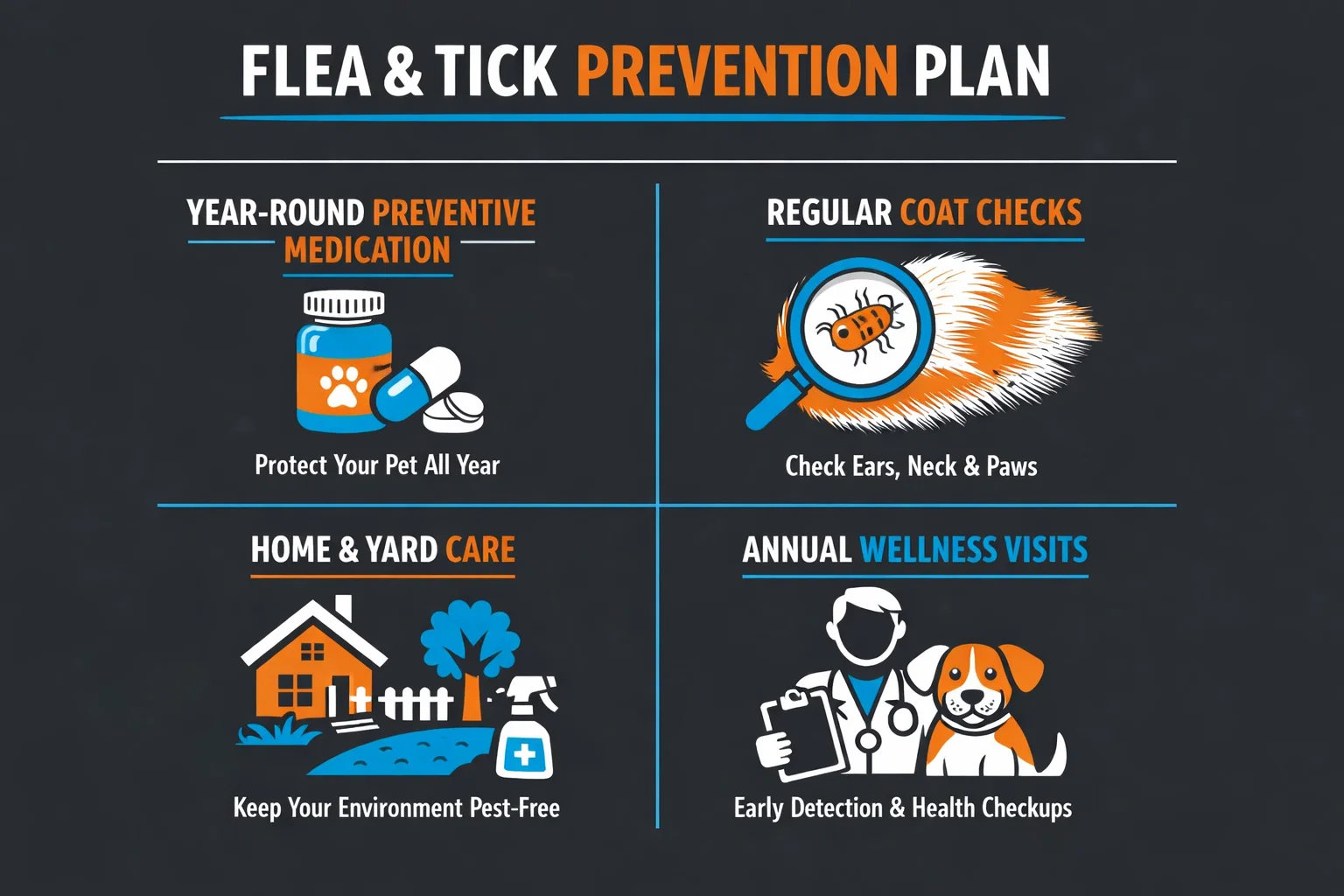
Effective flea and tick prevention requires more than a monthly application of whichever product is on sale at the grocery store. Not all preventives are created equal, and the right option for your pet depends on their species, size, health status, and level of outdoor exposure. Some over-the-counter products provide limited protection or carry safety risks for certain animals, which is why a conversation with your veterinarian before choosing a product is always the right call.
We offer prescription-strength flea and tick preventives that are far more effective than many retail alternatives, and we match each pet to the option best suited to their needs. Here are the core components of a solid prevention plan:
- Year-round preventive medication: the single most effective tool for keeping fleas and ticks off your pet
- Regular coat checks: inspect your pet thoroughly after any time spent outdoors, paying close attention to ears, neck, and paws
- Home and yard management: wash pet bedding frequently and consider treating outdoor areas where pests are known to congregate
- Annual wellness visits: routine checkups allow early detection of any tick-borne illness before it progresses
No single step is enough on its own, but combining these approaches alongside routine wellness care gives your pet the strongest protection possible.
Schedule a Parasite Prevention Consultation at Montclair Veterinary Associates
At Montclair Veterinary Associates, we believe proactive care is always better than reactive treatment. Dr. Waxman trained at the University of Pennsylvania School of Veterinary Medicine and has over a decade of experience helping pet owners in the Montclair area stay ahead of common health threats, including the parasite risks that are especially prevalent in Northern New Jersey. Routine wellness exams are one of the best opportunities to review your pet’s prevention plan and make sure it still fits their current lifestyle.
If you have questions about flea and tick prevention or want to find the right product for your pet, our team is ready to help. Fill out our contact form to schedule an appointment at our Montclair office.